Switzerland delays holiday home restrictions

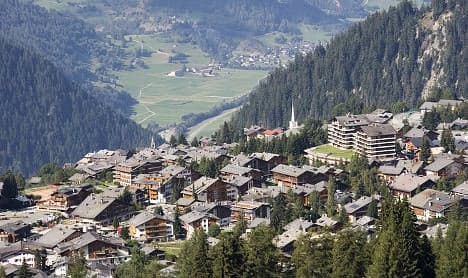
The federal government has decided to delay by four months the implementation of a law to limit the construction of holiday homes in Switzerland.
The legislation, which aims to ban new secondary residences in Swiss municipalities where the level is already above 20 percent, is now set to take effect on January 1st 2013.
Voters on March 11th approved the law, an initiative spearheaded by environmentalist Franz Weber.
In delaying the legislation, the government issued a statement on Wednesday noting that it requires diverse changes to Swiss property regulations.
Weber pushed for the restrictions to end the “invasion” of secondary homes in some communities, particularly in tourist resorts, where chalets remain vacant for much of the year.
Supporters of the initiative were also concerned about real estate developments threatening natural areas.
The so-called “Lex Weber” applies to the authorization of new holiday homes in municipalities where the quota of 20 percent is exceeded.
However, an exception applies in cases when builders can guarantee that they will not have “empty beds” for most of the year and that they are to be used exclusively for tourists.
The federal government officially defines a secondary residence as one that is “not used year round by a person officially living in the municipality or for a business activity or training purposes”.
“Owners will still be able to convert their principal residence into a secondary residence,” Environment Minister Doris Leuthard said in Bern.
“But after transforming a principal residence into a secondary one, an owner would not be able to apply for a permit to build a new principal residence,” Leuthard said.
Supporters of the initiative were angered by the government delay.
“It is a veritable denial of democracy,” Pierre Chifelle, a representative for Weber, was quoted as saying by several newspapers.
“The Swiss people wanted an immediate halt to anarchic development.”
Concerns have been raised over hundreds of applications already filed to build holiday homes that may escape the law’s restrictions.
The Zurich-based Tages Anzeiger newspaper outlines numerous loopholes that will allow builders and owners to skirt the legislation.
The law, for example, allows for hotels older than 25 years to be converted into condos.
However, an appraiser must certify that such hotels are no longer economically viable.
Resort developments remain possible provided they are managed in a way to ensure year-round use by tourists.
Tages Anzeiger also notes that the timetable set out by Leuthard is only provisional and that the actual legislation needs to be passed by parliament.
Comments
See Also
The legislation, which aims to ban new secondary residences in Swiss municipalities where the level is already above 20 percent, is now set to take effect on January 1st 2013.
Voters on March 11th approved the law, an initiative spearheaded by environmentalist Franz Weber.
In delaying the legislation, the government issued a statement on Wednesday noting that it requires diverse changes to Swiss property regulations.
Weber pushed for the restrictions to end the “invasion” of secondary homes in some communities, particularly in tourist resorts, where chalets remain vacant for much of the year.
Supporters of the initiative were also concerned about real estate developments threatening natural areas.
The so-called “Lex Weber” applies to the authorization of new holiday homes in municipalities where the quota of 20 percent is exceeded.
However, an exception applies in cases when builders can guarantee that they will not have “empty beds” for most of the year and that they are to be used exclusively for tourists.
The federal government officially defines a secondary residence as one that is “not used year round by a person officially living in the municipality or for a business activity or training purposes”.
“Owners will still be able to convert their principal residence into a secondary residence,” Environment Minister Doris Leuthard said in Bern.
“But after transforming a principal residence into a secondary one, an owner would not be able to apply for a permit to build a new principal residence,” Leuthard said.
Supporters of the initiative were angered by the government delay.
“It is a veritable denial of democracy,” Pierre Chifelle, a representative for Weber, was quoted as saying by several newspapers.
“The Swiss people wanted an immediate halt to anarchic development.”
Concerns have been raised over hundreds of applications already filed to build holiday homes that may escape the law’s restrictions.
The Zurich-based Tages Anzeiger newspaper outlines numerous loopholes that will allow builders and owners to skirt the legislation.
The law, for example, allows for hotels older than 25 years to be converted into condos.
However, an appraiser must certify that such hotels are no longer economically viable.
Resort developments remain possible provided they are managed in a way to ensure year-round use by tourists.
Tages Anzeiger also notes that the timetable set out by Leuthard is only provisional and that the actual legislation needs to be passed by parliament.
Join the conversation in our comments section below. Share your own views and experience and if you have a question or suggestion for our journalists then email us at [email protected].
Please keep comments civil, constructive and on topic – and make sure to read our terms of use before getting involved.
Please log in here to leave a comment.