
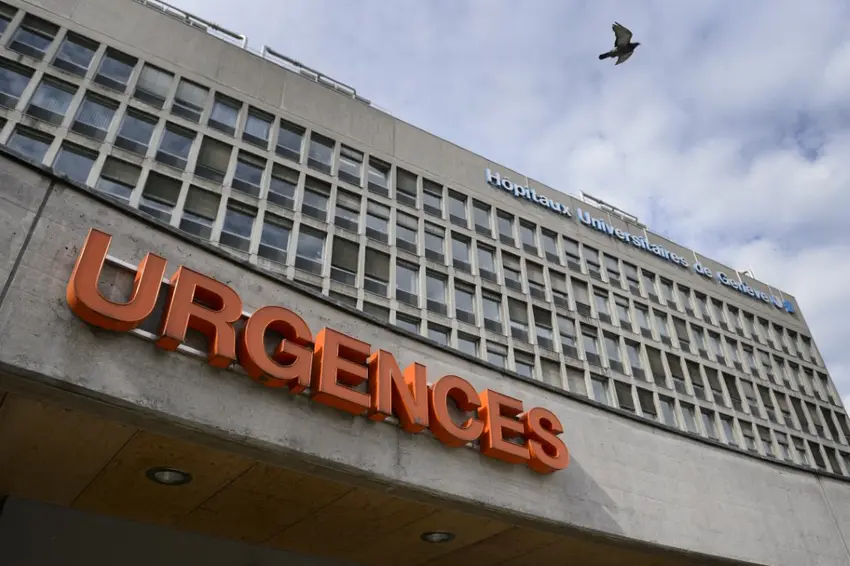
This move intended to stop people from seeking emergency help for mild cases has gained momentum, as the National Council's Social Security and Public Health Commission (CSSS-N) announced it is opening the consultation procedure on its preliminary draft of the new law.
What is this measure about?
Under the proposal, the 50 francs would be part of the health insurance co-pay, which means the person would have to pay it out of their own pocket.
Supporters of the proposal argue that too many people show up at emergency rooms with mild symptoms that don’t require urgent care but should be treated by family doctors.
They also say such visits not only unnecessarily use hospitals’ resources, but also contribute to the already very high healthcare costs.
However, children and pregnant women would be exempt from this rule, as would those who come with life-threatening conditions or those who require hospitalisation.
‘Strengthen awareness of costs and individual responsibility’
In a recent press release, the CSSS-N said it is “opening the consultation procedure on its preliminary draft.”
This step allows all citizens, cantons, communes, political parties, trade unions, associations, and other interested groups to comment on the preliminary draft.
The CSSS-N also reiterated that the main objective of this move, which has been debated for several years, is to “strengthen awareness of costs and individual responsibility,”of each person before they visit the ER for non-urgent cases, and ultimately “to relieve hospital emergency rooms.”
Therefore, “in order to reduce the overload of hospital emergency services and thus ensure the proper functioning of an essential element of the Swiss healthcare system, the committee wishes to introduce a financial incentive. This should be able to divert minor cases from emergency services and direct them towards more appropriate and cost-effective care.”
What happens next?
Putting a preliminary draft up for consultation means the inclusion of this new legislation in the Federal Act on Health Insurance (KVG/LaMal) is one step closer.
However, the exact date when it will be implemented is not set, especially since it would have to be voted on in the referendum first.
Also, since cantons are responsible for setting and implementing their own health policies, it is not sure whether all of them will enact this federal legislation.
But how can you know whether your symptoms are serious enough to warrant a visit to the ER?
Emergency rooms are for just that: true medical emergencies, which, if not treated quickly and immediately, can be life-threatening.
This includes (but is not limited to) heart attacks and strokes, head trauma, severe respiratory distress, heavy bleeding, serious injuries, and other conditions where any delay in treatment can put your life or health at risk.
If you don’t feel well (even in the absence of the above-mentioned symptoms), you may overestimate your ailment and think it requires an urgent visit to the ER.
But before you go there, get your condition evaluated by other medical professionals. Your first point of contact should be your primary physician (GP), who can decide whether you need to go to the hospital or can be treated another way.
In the event you don’t have a GP (or are a tourist), there are other options available in Switzerland, such as medical centres and walk-in clinics in virtually all cities.
If you are not sure how serious your condition is, you can call a “duty doctor” service (Notarzt in German, médecin de garde in French).
Their numbers vary by cantons; it is 0800 33 66 55 in Zurich, 022 748 49 50in Geneva, 061 261 15 15 in Basel, and 0848 133 133 in Vaud.
People who answer the phone will ask questions about your symptoms and can decide whether you need to go to the ER, require a visit from the duty doctor, or can just wait and see how your condition evolves.
A duty doctor is also an alternative to the emergency room if you start feeling ill at night, on weekend or public holiday, as this service responds 24/7.
Following the above guidelines will ensure you will not have to pay the 50-franc fees for just showing up at the ER.
READ ALSO: What are Switzerland's guidelines for health emergencies?
Comments (1)