
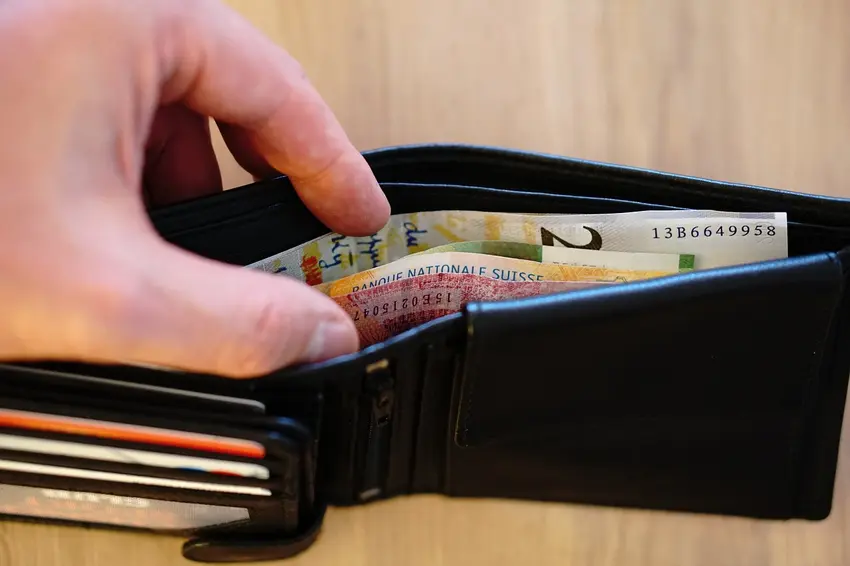
In 2024, to compensate for the loss of purchasing power of families, Swiss MPs approved the move to raise the amount of financial assistance paid for minor children an those up to the age of 25 who are pursuing training or higher education.
The Social Security and Public Health Commission of the Council of States decided that in future, child allowances must amount to at least 250 francs and training allowances to at least 300 francs a month — 50 francs over the current federal guideline.
Currently, 17 cantons pay more than the federal minimum — in Geneva, for instance family allowance is 311 francs per child, and educational allowance amounts to 415 francs.
In Vaud, these payments are 340 and 440; in Zug 300 for each; and in Basel-City 275 for child allowance and 325 for education.
The cantons where these benefits exceed the federal minimum will not need to increase their allowance, while all the others will have to meet the new treshold.
It is not yet clear when the new rules will be implemented, as the National Council's Committee on Social Security and Public Health still has to draw up a draft revision of the law.
Who is, and will be, eligible for these benefits?
According to the Swiss government, “you are entitled to family allowance if you are employed or self-employed, or if you do not work and your taxable income is low (the threshold figure may vary from canton to canton).”
You are not entitled to family allowance if you are registered as unemployed. However, in this case you can receive an unemployment benefit supplement.
Generally, your unemployment pay is equivalent to 70 percent of your average salary during the previous six months.
But you will qualify for an additional 10 percent – that is, 80 percent of your income — if you have dependent children younger than 25 years old.
Are foreign nationals able to apply for these benefits?
If you have a residency permit, have been working in Switzerland and contributing to the social security scheme, then you can receive this financial assistance from your local authority.
In some cases, cross-border workers eligible to obtain these benefits as well.
For instance, “if a person is entitled to family allowances under Swiss law and their children are domiciled abroad, there are special rules for granting family allowances,” according to Federal Social Insurance Office.
“In such cases, family allowances are only paid if Switzerland is obliged to do so under an international social security agreement.”
Such agreements are in place with the EU and the EFTA states — Norway, Iceland, and Liechtenstein — though only citizens of the latter country would be considered to be cross-border commuters.
What other financial help are foreign residents eligible for?
These payments, officially called “Social benefits for poverty reduction,” include health insurance and housing allowances.
Let’s look at health insurance first, since the ever-increasing costs of premiums place a significant burden on household budgets.
If you have a low income and / or children, you qualify for this aid. Before deciding whether you receive the assistance, however, your canton of residence will look not only at your earnings, but at any other financial assets you hold as well.
So if your income is low but you have plenty of money in the bank in the form of savings or other investments, you will not qualify.
Generally speaking, anyone who is a low earner or has a large number of children, could be eligible for subsidised premiums, though criteria, as well as amounts, may vary from one canton to another.
Note, however, that state subsidies apply only to the obligatory KVG / LaMal insurance, not to any supplemental polices you buy.
How much of a reduction you will get depends on your canton’s ‘pay scale’, which usually increases as insurance rates go up.
In Zurich, for instance, in 2024 “1.2 billion francs will be available for premium reductions, which corresponds to an increase in the contribution of 10 percent compared to the previous year.” the canton said.
What about housing?
Low-earners are entitled to have their rents subsidised, as determined by cantonal authorities.
Generally speaking, in order to claim this help, you must prove that you live in the cheapest available housing in your area. (Needless to say, if you reside in a luxury apartment, or own property, you can’t ask for rent subsidy.)
If you don’t fulfill this particular condition, you will be told to move to cheaper accommodations before claiming any benefits.
Exceptions to this rule include situations such as a large number of minor children living in the household, which may make relocation — that is, finding a sizeable apartment at a cheaper price — unrealistic.
As is the case with health insurance premiums, the amount of subsidy differs by the canton.
What other help can you get?
If, despite familly allowances, as well as health insurance and housing subsidies, your financial situation is still strained, you could apply for social assistance.
It is, according to the government, “a last resort benefit to prevent people from falling into poverty, defined as 2,284 francs per month for an individual and 4,010 francs per month for a family.
Your municipal authorities will examine your financial situation before deciding whether you are eligible for help — and how much.
But while foreigners can apply for this help, doing so will exclude them from getting Swiss citizenship (unless they repay the total amount before applying) and downgrading, or even revoking, their work permits.
READ ALSO: How applying for social benefits could see your Swiss work permit cancelled
And then there is the disability insurance
If you are suddenly unable to work for an extended period of time (or ever) for health reasons, you may qualify for a disability pay.
To receive this pension, your capacity to work must have been reduced by an average of at least 40 percent for one year, and the disability must be irreversible.
The amount will typically correspond to 67 percent of your salary.
If you don’t abuse this right — that is, you cheat the system by working on the sly while collecting benefits — a disability pension should not normally prevent you from applying for naturalisation.
That’s because you are not relying on public funds, but on the money you earned, and paid into the social security scheme, while you were working.
READ ALSO: What disability benefits in Switzerland are foreigners entitled to?
Comments