
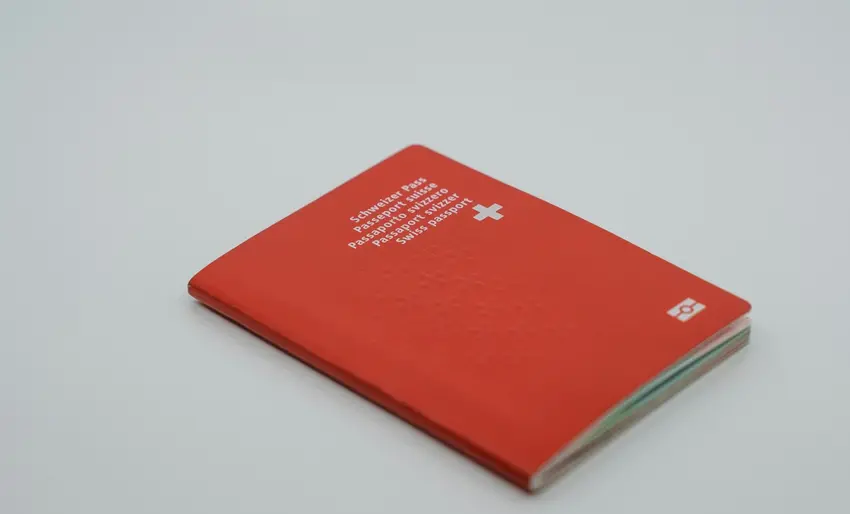
Could the wait period for Swiss citizenship be cut?
A sufficient number of signatures has been collected on a petition seeking to allow all eligible foreigners to apply for Swiss citizenship after five years of residency, instead of the current ten.
The law needs to be revised, according to the motion’s instigators, because existing rules are too strict.
Currently, EU / EFTA citizens have to reside 10 years in Switzerland on both B and C permits, before being able to apply for naturalisation; nationals of third-countries must wait even longer.
The proposed legislation would shorten the wait period for both groups of foreigners.
READ ALSO: Swiss to vote on cutting the wait period for citizenship
A new twist in the assisted death capsule controversy
An investigation has been launched into the death of an American woman who was the first person to use the controversial Sarco suicide pod since its inauguration in July.
Officially, she died from nitrogen asphyxiation, but prosecutors in the canton of Schaffhausen, where she died on September 23rd, are investigating 'suspicious' circumstances of her death.
That’s because the autopsy revealed unexplained marks on the victim’s neck, which pointed to possible strangulation as the cause of death.
Florian Willet, an attorney for the assisted dying organisation The Last Resort, who was the only one present on site at the time of death, is being detained by police pending further investigation.
READ ALSO: Could Switzerland tighten its assisted suicide laws after Sarco investigation?
MPs consider a motion to 'swap' 26 cantons for 10 regions
A private citizen, Walter Knöpfel, 75, submitted a petition to the parliament, pushing for merging of Switzerland’s 26 canons into 10 regions.
The proposal is currently being examined by the National Council.
In it, Knöpfel argued that the current geographical and administrative distribution of cantons makes no sense, because “many cantons are simply too small" to stand by themselves and should not form their own governments and other public entities, he told Swiss media.
READ ALSO: So what if Switzerland scrapped its cantons and created regions instead?
Switzerland grants asylum to a German citizen
In an unusual case that Swiss authorities called “an absolute exception,” a German-citizen child born in Switzerland to Asian parents received political asylum.
The single mother has been granted asylum in Switzerland, but the father lives in Germany and is a dual citizen, which means that the child is German as well.
However, since the child was born in Switzerland to a mother who has been granted asylum, the child ‘inherited’ the same status.
READ ALSO: How did a German citizen get asylum in Switzerland?
New statistics reveal how many poor people live in Switzerland — and where
An Europe-wide study indicates that 8.7 percent of the population live in poverty, which is defined in Switzerland at 2,279 francs per month on average for a single person, and 3,976 francs per month for two adults and two children.
It shows that Ticino’s poverty rate is the highest in Switzerland, with 27.9 percent of the local population at risk of poverty.
Next is the so-called Central Plateau, which stretches from Lake Geneva in the southwest to Lake Constance in the northeast.
There, 22.1 percent of residents are impacted.
That rate is 18.8 percent in the Lake Geneva area and 18.9 in the eastern part of the country.
In Zurich area, 14.7 percent are at risk of poverty, and 12.6 percent in central Switzerland.
READ ALSO: How many people in wealthy Switzerland are actually at risk of poverty?
Comments