
However, it’s not all gloom and doom: according to economists, as long as energy prices do not soar again, price increases for 2025 will be limited in Switzerland.
Inflation will remain low and even fall below 1 percent.
Still, some prices will inevitably increase.
For instance:
Health insurance
Health insurance rates are 6 percent higher in 2025.
That’s the national average: in certain cantons, this figure is even higher.
For example, the highest increases, far exceeding the national average, are in Ticino (10.5 percent), followed by Glarus (9.2), and Jura (8.9).
Geneva’s and Vaud’s hikes are just slightly above average — 6.5 and 6.4 percent, respectively.
But even if hikes in your canton of residence are minimal (like in Zurich and Basel-City — 4.9 and 1.5 percent, respectively), your cost of living will go up nevertheless.
READ ALSO: Swiss health insurance premiums to rise by 6 percent in 2025
Car insurance
You have likely already received your auto insurance bill for 2025, so you know that the premium will be higher than in 2024 — in some cases, by more than 15 percent.
Six out of 13 insurers surveyed by Comparis price comparison platform “announced a general premium adjustment for 2025. In the case of four providers, individual premium increases are also possible for existing contracts.”
Rents
The increasing housing shortage will continue to drive the rents up, according to UBS Bank analysis.
It estimates that new rents will increase by 3 percent in 2025.
(However, other analysts say that the drop in the mortgage reference rate in 2024 means some tenants will see their rent fall by the middle of 2025).
Bread
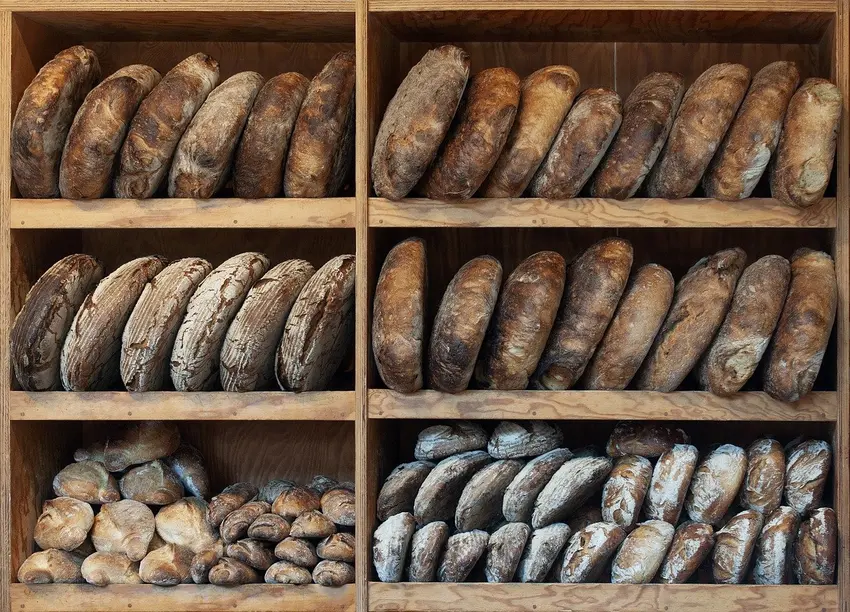
Bread, and baked goods in general, are becoming more expensive in Switzerland.
Persistent rainfall during the spring and summer months had damaged wheat and other crops used to produce flour and, from it, bread.
The harvest volume for wheat and barley, for instance, is one-third lower than it was in 2023.
As a result, the cost of baked goods is going up, with Coop saying price hikes of between 4.5 and 9.1 percent are expected.
Coffee
Due to poor coffee bean harvests — which, in turn, are driven by climate change — coffee is increasingly becoming a luxury item.
In Switzerland, the price of a cup of coffee in cafés and restaurants has risen for the fifth year in a row.
On average, it now costs 4.58 francs — 9 cents more than in 2023.
However, there are regional differences in how much more you will have to pay.
Unsurprisingly, it is most expensive in Zurich — 4.86 francs for a cup of coffee on average.
But price hikes will be less drastic in some other parts of Switzerland, according to the annual survey by the umbrella organisation, Cafetiersuisse.
It found the cheapest cup of coffee (4.45 francs on average) in Solothurn, followed by Aaragu, where the average price is 4.50 francs.
Air travel
Between January and November 2024, airline tickets cost almost 30 percent more than in 2019, the last year before the Covid crisis.
These prices are not likely to fall in 2025; in fact, they will increase further because the transition to less polluting air transport, with reduced CO2 emissions, will require significant investments.
On intercontinental flights, for instance, competition remains limited, which keeps prices high, particularly in peak travel season.
On the positive side, low-cost airlines continue to offer cheap tickets on European flights.
Will anything become cheaper in 2025?
Fortunately, yes.
Take electricity, for instance.
After considerable hikes in the past two years, electricity tariffs will drop by an average of 10 percent in 2025, according to the Federal Electricity Commission (ElCom).
This means that for a ‘typical’ household, which annually consumes 4,500 kWh, the electricity bill will be 141 francs lower compared to 2024.
READ ALSO: How much could electricity prices fall by in your part of Switzerland?
Drugs
The Federal Office of Public Health (FOPH) will reduce the price of hundreds of medications, including 55 percent of the original brand medicines.
Additionally, 70 percent of generic and bio-similar drugs will become cheaper as well.
This represents a price reduction — by 12 percent on average — of almost 300 medicines.
Mortgages
Driven by four successive rate cuts by the Swiss National Bank — in March, June, September, and December 2024 — mortgage rates are expected to stay low, at least in the short term.
"Inflation is now slowing down more quickly than expected,” according to Dirk Renkert, money expert at Comparis platform.
Until the end of June 2025, the indicative rates for 10-year fixed-rate mortgages are expected to fluctuate in the range of 1.45 to 1.65 percent, he said.
As for the for five-year fixed-rate mortgages, they are likely to fluctuate between 1.30 and 1.45 percent — which is positive news for anyone wanting to finance a property now or in the near future.
The price of properties will not drop in the foreseeable future, but at least financing of real estate will be more affordable.
READ ALSO: Mortgage rate drop in Switzerland spells good news for buyers
Hundreds of food items
In October, Migros cut prices on over 60 types of fruits and vegetables.
Prices on 940 more products will be slashed gradually over the next months as well, which means some food will be less expensive in 2025.
And according to Migros CEO Mario Irminger, this is a selfless move on the company’s part.
“We are consciously accepting the fact that our profit will decline. As a cooperative, Migros does not seek to maximise its profits,” he said.
Irminger also added that cuts in price of produce and other agricultural goods “is in no way to the detriment of the farming community and producers.”
Comments