
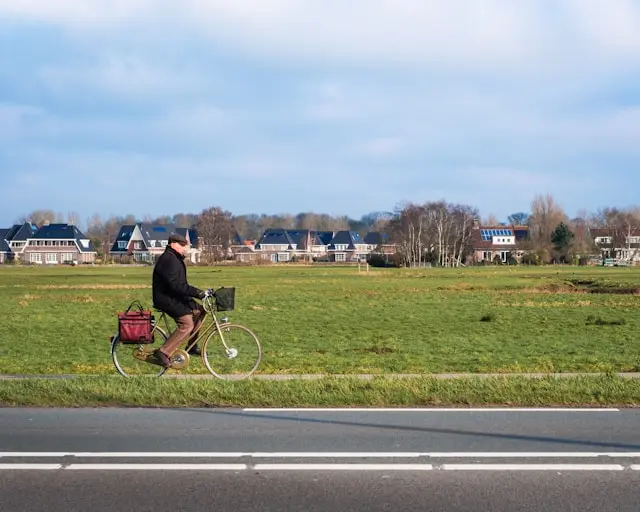
The most recent law on cycle paths in Switzerland — the Federal Law on Bicycle Lanes (LVC) — which came into effect on January 1st, 2023, mandates cantons to develop and implement cycle path networks on their territories, with a deadline to finalise plans set for the end of 2027, and the actual implementation for 2040.
But is it reasonable to place the burden of footing the bill for this project on taxpayers, many of whom may not even own a bike, much less ride it?
In February Zurich's cantonal parliament provisionally supported a motion asking that cyclists pay a traffic tax.
The proposal is therefore calling for a cost-covering traffic tax for cyclists but it might not just be bike users in Zurich that have to pay. Similar considerations are already being made at the federal level.
The ‘user pays’ principle
The Federal Roads Office (ASTRA) is studying the possibility of introducing a tax on two-wheelers for the purpose of financing the cycling infrastructure.
It is examining not only the exact amount of the tax, but also the form it will take — it could be a physical or digital vignette, as is the case with cars and other vehicles — an annual fee, or a surcharge while purchasing a new bicycle.
The idea has its supporters and opponents.
Among those in favour of the tax is MP Xavier de Haller, who is also the president of the Vaud section of the Automobile Club of Switzerland (ACS). For him, such financial contribution from cyclists, "even a modest one, is “entirely logical.”
The same ‘user-pays’ principle already concerns motorists, who not only pay an annual vehicle tax, but also a 40-franc vignette they must purchase each year, he said.
On the other hand, deputy Louise Trottet, who is part of the pro-biking lobby, believes that the tax would cause a lot of "absurdities," such as the fate of children who ride bikes.
"Are we going to tax them too?" she asked.
Trottet also pointed out that many cyclists own cars, so they already pay their share of taxes as motorists.
What is the bike lane situation in Switzerland right now?
Despite the LVC legislation, a number of Swiss cantons are dragging their feet in implementing this law on bike lane networks.
READ ALSO: Why Switzerland is not up to speed on new bike lanes
According to the Swiss Bicycle Advocacy Association (Pro Velo), “the LVC gives the cantons duties and deadlines to respect. Some cantons show that they take them seriously, by presenting introductory laws shortly after entry into force. Others are lagging behind.”
Among the ones on the right path are Bern, Valais, Fribourg, and Lucerne.
Overall, however, "Switzerland has a high-quality cycling infrastructure, with extensive network of designated bike paths," Pro Veto said.
In fact, capital Bern is among the top-10 cities in Europe in terms of “bike-friendliness,” as one international study indicated.
Do you agree with the idea of taxing cyclists in Switzerland? Share your views in the comments section below.
Comments