
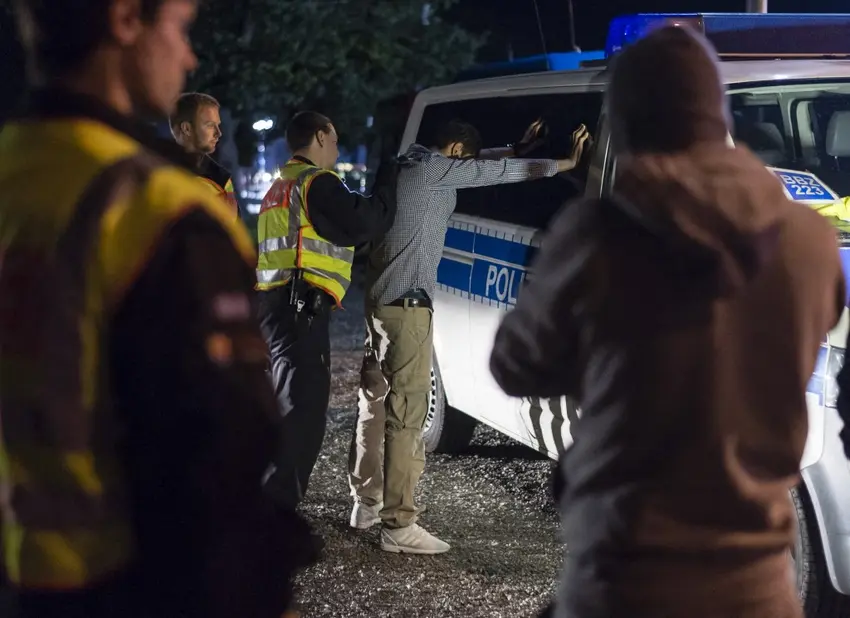
The borderless Schengen area guarantees free movement to tens of millions of EU citizens, residents and visitors.
It recently celebrated its 40th anniversary, and after originally starting with just five countries signing a convention pledging to “gradually abolish” internal borders checks and allow people to travel around freely, today the Schengen area includes 25 of the 27 EU member states and the four countries of the European Free Trade Association (Iceland, Liechtenstein, Norway and Switzerland).
According to the EU Council website, the Schengen area covers over 4.5 million square kilometres with a total population of almost 450 million people. Every day around 3.5 million people cross the Schengen internal borders for work, study or visits, and almost 1.7 million people reside in one Schengen country while working in another.
Under the Schengen Borders Code, which sets the rules governing the Schengen area, internal border checks can be temporarily restored where there is a “serious threat to public policy or internal security”, from the organisation of a major sport event to a terrorist attack.
These checks should be a “last resort” measure, should be limited to the period “strictly necessary” to respond to the threat and not last more than 6 months. In exceptional circumstances, internal border controls can be reintroduced for a maximum of two years.
Several members of the bloc have reintroduced temporary border controls in recent years. The full list of countries that currently have controls in place is available here.
READ ALSO: Schengen hits 40 - What problems lie ahead for Europe's border-free zone?
According to European Commission information, the following European countries have reintroduced temporary border checks for the following dates:
Spain - 27/06/2025 – 05/07/2025
Spain will reintroduce checks towards the end of June because of the IV United National International Conference on Financing for Development in Sevilla (30 June – 3 July 2025).
The checks will be at the land borders with France and Portugal, as well as at the internal air borders at Alicante, Almería, Barcelona, Bilbao, Girona, Granada, Madrid, Málaga, Murcia, Sevilla and Valencia. There will also be checks at the internal maritime borders of Barcelona, Málaga and Palma de Mallorca.
Italy - 19/06/2025 – 18/12/2025
Italy has stepped up checks at its land border with Slovenia from June 19th until the end of the year.
The government has justified it because of the "continued threat of terrorist infiltrations into migratory flows along the Western Balkan route, ongoing crises in the Middle East and Ukraine, high level of irregular migration including a strong presence of criminal smuggling and trafficking networks. Italy also says the checks are justified because of the "heightened security risks associated with the Universal Jubilee of the Catholic Church."
Italy also points to the" risk of violent actions against Israeli citizens and terrorist activity."
Austria - 12/05/2025 – 11/11/2025
Austria has reintroduced checks at its land borders with Hungary, Slovakia, the Czech Republic and Slovenia due to: "threats associated with the continued high levels of irregular migration and migrant smuggling across Austria’s southern borders, as well as the strain on the asylum reception system and basic services.
It also cites "Russia's ongoing war of aggression against Ukraine and the security situation in the Middle East, intensifying the threat posed by Islamist extremism and terrorism."
Denmark - 12/05/2025 – 11/11/2025
Denmark has stepped up border checks at its land and sea borders with Germany because of the "serious threats to public policy and internal security posed by possible sabotage actions from Russia, as well as continuous terrorism-related events and organised crime, notably, tied to the Israeli-Hamas conflict and driven by radicalisation from groups such as Islamic State and Al-Qaida.
The government also justifies the move because of the threat of "potential attacks on Jewish and Israeli targets."
Denmark says it may also step up checks on all its borders.
Norway - 12/05/2025 – 11/11/2025 -
For Norway the border checks at ports and ferry links to Schengen countries are due to the "general threat aimed at the energy sector, threats of sabotage posed by the Russian intelligence service, as well as to increase infrastructure protection."
Sweden - 12/05/2025 – 11/11/2025
Sweden has reintroduced checks at its land, air and sea borders with Denmark because of "serious threats to public policy and internal security arise from organised cross-border crime and terrorism.
It notes the "attacks involving military-grade explosives against foreign institutions and the public, including the involvement of foreign state actors leveraging criminal gangs, coupled with persistent threats from violent Islamist groups and individuals."
France - 01/05/2025 – 31/10/2025 -
The EU says border controls France has border controls in place at "all internal borders (land, air, and sea) with Belgium, Germany, Luxembourg, the Swiss Confederation, Spain, and Italy".
This is because of: "Serious threats to public policy, public order, and internal security posed by persistent jihadist threats, a rise in antisemitic attacks.
It also points to "the growing criminal networks facilitating irregular migration and smuggling, and irregular migration flows towards the Franco-British border that risk infiltration by radicalised individuals, as well as the irregular crossings on the Channel and North Sea borders, along with rising violence among migrants, particularly in northern coastal areas such as Dunkirk and Calais, leading to tense and perilous situations for both migrants and law enforcement."
Germany - 16/03/2025 – 15/09/2025.
Reinstated border controls in Germany have made headlines since the new government brought them back in, not least because of the queues they have caused at the frontiers with France and Poland.
The checks are in place at land borders with France, Luxembourg, Belgium, the Netherlands, Denmark, Austria, Switzerland, Czechia, and Poland.
The EU says they were brought in because of "Serious threats to public security and order posed by continued high levels of irregular migration and migrant smuggling, and the strain on the asylum reception system.
It also points to the "the impact of the global security situation (including Russia's war of aggression against Ukraine and the situation in the Middle East) on security and migration."
READ ALSO: How long can Germany keep its border checks in place?
Slovenia - 22/06/2025 – 21/12/2025 -
In Slovenia the government has reintroduced checks at land borders with Croatia and Hungary.
It justifies the move because of the "serious threats to public policy and internal security posed by a high level of terrorist threats and organised crime, including human smuggling and arms trafficking, the risk of terrorist infiltrations into migratory flows via the Western Balkans, hybrid threats from the Russian Federation and Belarus, as well as instability in the EU’s neighbourhood, including Russia’s ongoing aggression against Ukraine and instability following the fall of Assad’s regime in Syria."
It also says the checks are in place due to Russian nationals trying to enter Slovenia.
The Netherlands - 09/06/2025 - 08/12/2025
The Netherlands has justified checks at its land and sea borders with Germany and Belgium "due to the "serious threat to public policy caused by high levels of asylum applications, irregular migration, migrant smuggling, and secondary movements, leading to an overburdening of the migration system in general and the asylum system in particular.
It also notes the "pressure on public services, including housing, health care and education."
Bulgaria - 01/01/2025 – 30/06/2025
The Bulgarian government has reintroduced checks at its land border with Romania, noting the "security risks related to illegal migration, including smuggling activities, as well as migratory pressure caused by ongoing crises in the Middle East and Africa, particularly in Syria, Afghanistan, and Gaza/Lebanon.
Comments