
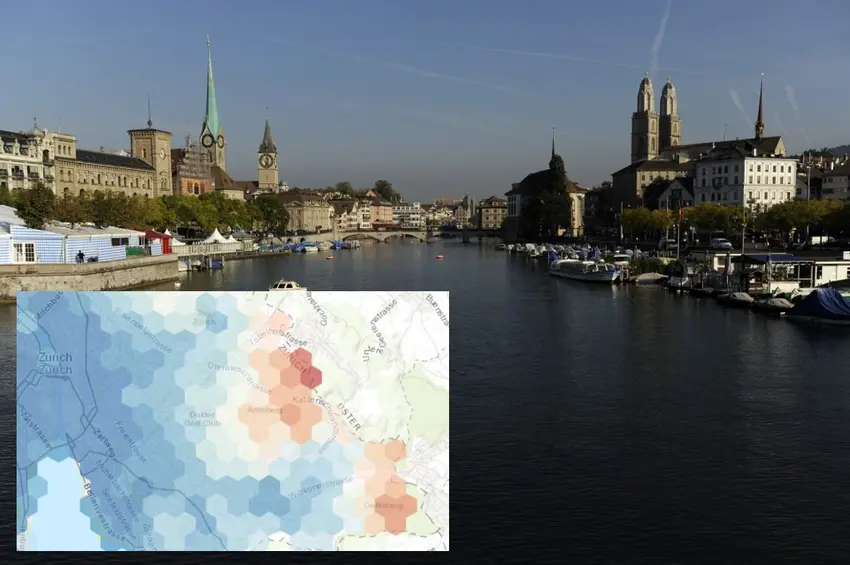
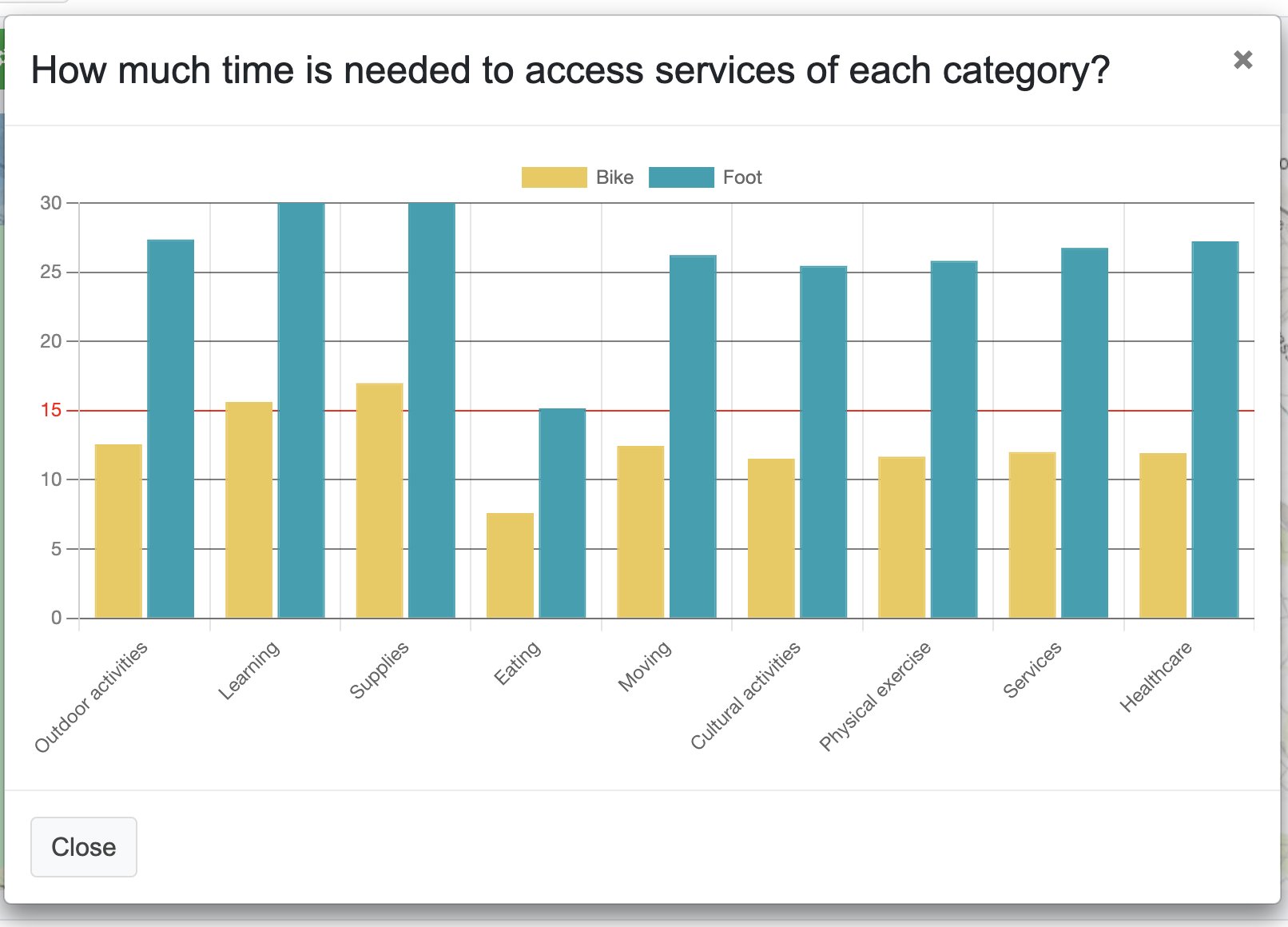
The study, published in the journal Nature Cities earlier this week, analysed data from over 10,000 cities globally. It assessed how far residents need to walk or cycle to reach essential services including shops, restaurants, education, exercise and healthcare.
The '15-minute city' concept, which gained traction during the COVID-19 pandemic, focuses on enhancing accessibility and sustainability by ensuring that basic services are within a 15-minute walk or bike ride.
READ MORE: Paris and Milan judged closest in the world to becoming '15-minute cities'
The study also introduced an online tool that visualises the distances residents must travel, using a colour scale from dark red (long distances) to blue (short distances).
"A lot of people already live in a 15-minute city," study co-author Hygor Piaget Monteiro Melo told AFP.
But it depends on where you look within a city, he said, because of the inequality in access to services between the centre and periphery. This in equality can be seen when examining Switzerland's major cities.
As the maps below show, while some cities in Switzerland are making significant progress toward the 15-minute city goal, others still have considerable work to do.
BASEL (View on page)
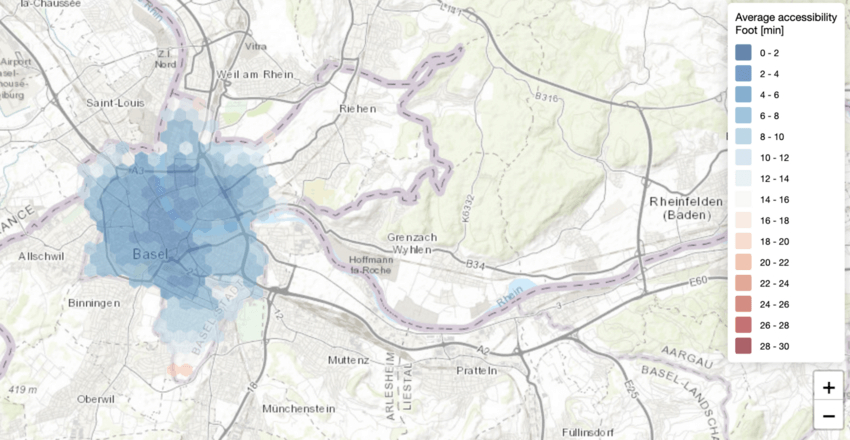
Historic Basel has kept much of the shape and size that it has for centuries, with urban spread distributed almost consistently in each direction. This means that public transportation and community services have kept pace with the growth of the city.
READ MORE: The nine maps you need to see to understand Switzerland
BERN (View on page)
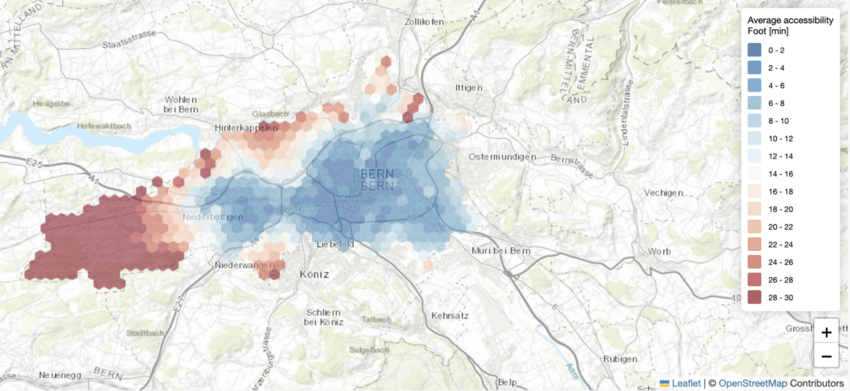
While much of the 'federal city' demonstrates excellent mobility for its citizens, recent expansion into the south-west has not kept pace with the development of basic public services, meaning a long walk for those doing their shopping or visiting a doctor.
GENEVA (View on page)
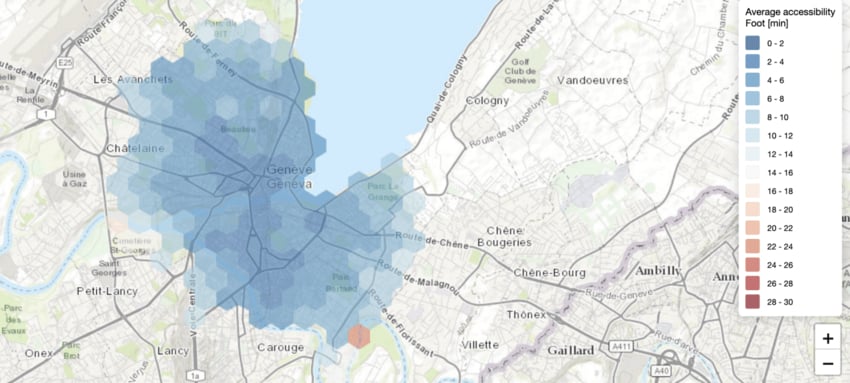
Geneva's status as a diplomatic and scientifc capital is reflected in its excellent public transportation and distribution of shops and basic services. Only areas towards the small hamlet of Carouge in the southeast score over 18 minutes on the accessibility scale.
LAUSANNE (View on page)
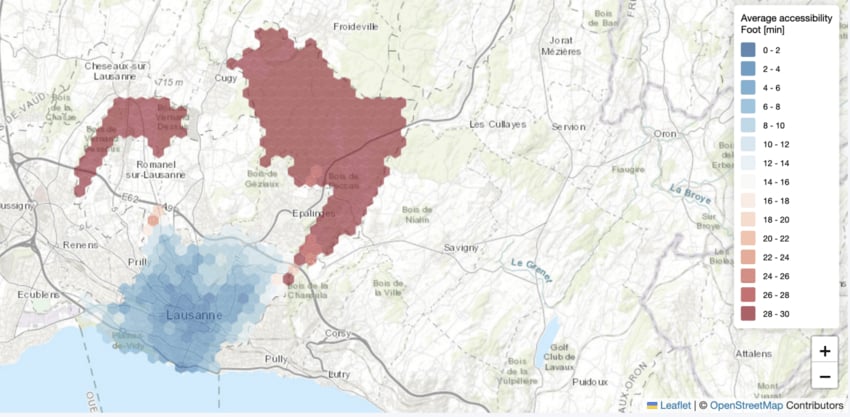
Lausanne's growth in recent decades as part of the life sciences focused 'Health Valley' has meant that newly-developed urban area to the northeast and northwest are poorly served by public amenities, necessitating long commutes for those shopping or visiting healthcare.
ZURICH (View on page)
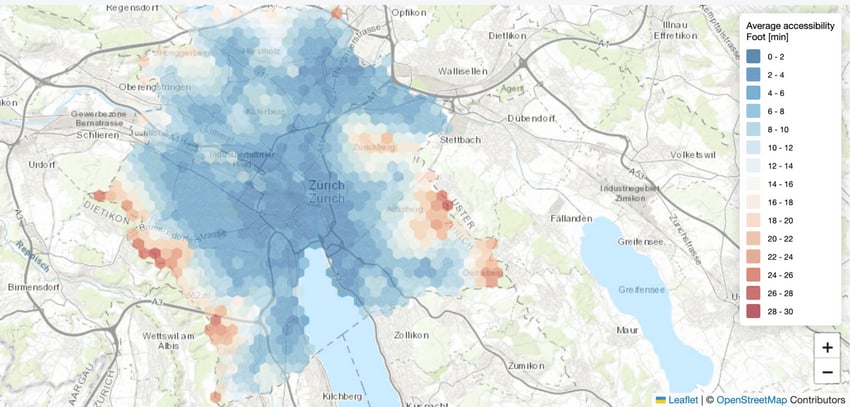
Zurich is Switzerland's most expensive city, so it's no surprise that citizens of the city enjoy excellent access to public transport, amenities and shopping. That said, recent expansion to the east and west has led to bands of relative inaccessibility, particularly concentrated around Wettswil am Albis to the west and Fallanden to the east.
Readers of The Local who are cyclists in Zurich have criticised the city's lack of infrastructure for cycling such as bike lanes.
READ ALSO: 'There are no cycle paths' - How Zurich could improve safety for cyclists?
Earlier this year The Local also reported how Swiss cantons were criticised for dragging their heels in implementing new bike lanes.
Comments