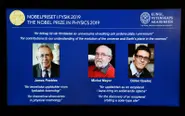
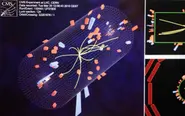
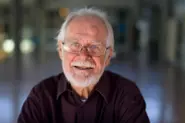
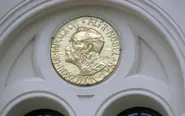
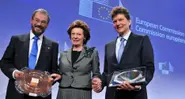
Swiss scientists Michel Mayor and Didier Queloz, along with Canadian-American James Peebles, have won the Nobel Physics Prize for their work in cosmology.
Switzerland is the world's most innovative country for a ninth consecutive year while Asian giant India made the biggest strides among major economies, a global indicator showed on Wednesday.
From cheesy science experiments to torturous citizenship interviews, here are the top ten stories from the last 12 months that could have only happened in Switzerland.
The Large Hadron Collider, the world's largest particle accelerator, has led to key breakthroughs in science, including the discovery of Higgs boson, writes Todd Adams, professor of physics at Florida State University.
Europe's physics lab CERN on Monday disavowed a lecture by an invited scientist who claimed physics was "built by men", and accused women of demanding specialist jobs without suitable qualifications.
The discoverer of switches in molecular cells; a pioneer in multiferroics and the inventor of the Grätzel dye-based solar cell. All three Swiss innovators could be in line for Nobel prizes in medicine, physics and chemistry respectively.
Researchers from Zurich were among the 2017 recipients of the Ig Nobel peace prize for discovering that playing the didgeridoo can help people stop snoring.
The Swiss government on Wednesday approved accords allowing Swiss researchers and businesses to participate in two projects co-funded by Horizon 2020, marking the resumption of the country’s full participation in this landmark EU research programme.
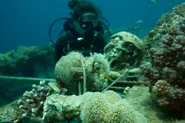
A coral reef in the Red Sea that can resist rising water temperatures could be the key to saving dying reefs in others parts of the world, a team of scientists from Switzerland and Israel has discovered.
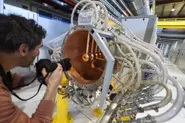
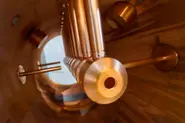
Europe's top physics lab Cern launched its newest particle accelerator on Tuesday, billed as a key step towards future experiments that could unlock the universe's greatest mysteries.
Scientists in Geneva will stage a protest march on April 22nd, Earth Day, against anti-science rhetoric and ‘alternative facts’, the term coined by US president Donald Trump's advisor Kellyanne Conway.
Swiss scientists will once again be able to participate fully in the landmark EU research programme Horizon 2020, after Switzerland finally ratified the protocol extending free movement to Croatia on Friday.
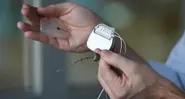
A new device has allowed two monkeys to regain use of their paralyzed legs by transmitting brain signals wirelessly, bypassing their spinal cord lesions, a study released on Wednesday by the journal Nature said.
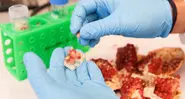
Pomegranate has long been considered a ‘superfood’ but without much evidence as to why, but now researchers at Lausanne’s federal technology institute EPFL have discovered the fruit could protect against one of the major causes of aging.
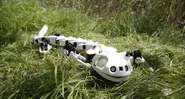
Researchers at Lausanne’s federal technology institute EPFL have created a robot that mimics the movement of a salamander, technology that could aid the development of therapies for paraplegics and amputees.
The future of Swiss scientific research is in danger should the country fail to solve its problems with the EU because of Brexit, a leading economist has warned.